


The short answer
A professionally produced corporate video in Toronto can cost anywhere from around $10,000 to well over $150,000 CAD,depending on what you're making.
A relatively straight forward interview-led piece might land between $10,000 and $20,000. A more developed brand film, recruitment piece or customer story will often fall somewhere between $20,000 and $60,000. Larger campaigns involving multiple shoot days, locations, talent and a full suite of deliverables can quickly move into the $75,000 to $150,000+ range.
That's a wide range, but there is a reason for it.
"Corporate video" can mean one camera filming an executive interview for half a day. It can also mean a multi-day production with a director, full crew, cast, multiple locations,custom sets, photography and dozens of finished assets.
Those aren't really versions of the same thing.
So rather than saying "it depends," here's a better look at what different levels of corporate video production actually cost and, more importantly, what you're paying for.
Corporate video production cost in Toronto by project type
These are full-service production ranges,not minimums for getting a camera into a room.
There are plenty of good free lance videographers in Toronto who can produce straightforward interview or event content for less, and sometimes that's exactly what a project needs.
The important thing is understanding what you're comparing.
A $7,500 interview shoot and a $50,000brand film aren't separated by $42,500 of production-company markup. They're usually fundamentally different productions, with different levels of creative development, crew, equipment, time and post-production behind them.
Where does a corporate video budget actually go?
People naturally think about the shoot first because that's the most visible part of production.
In reality, the camera day is only one part of the budget.
Most full-service productions break into three broad phases:
● Pre-production and creative development
● Production
● Post-production
The exact split changes significantly from project to project.
A documentary-style piece may require more research and editorial time. A commercial may have substantial casting,locations and art department costs. A motion-heavy piece may put much more of the budget into post.
That's why we don't find percentage rules particularly useful when we're building a budget. We start with what the project actually requires.
Pre-production and creative development
This is everything that happens before the cameras roll.
Depending on the project, that can include strategy, concept development, scripting, storyboards, casting,location scouting, scheduling, shot planning, production design, permits and technical planning.
It's also where a lot of the important decisions get made.
By the time you're standing on set with a full crew, that's an expensive place to still be figuring out what the idea is.
For us, the goal of pre-production is to arrive at the shoot knowing what we're making, why each scene is there and how the footage is going to turn into the final campaign. At WM Creative, this is where we focus a lot of our attention, so production and post can run as smoothly as possible.
Production
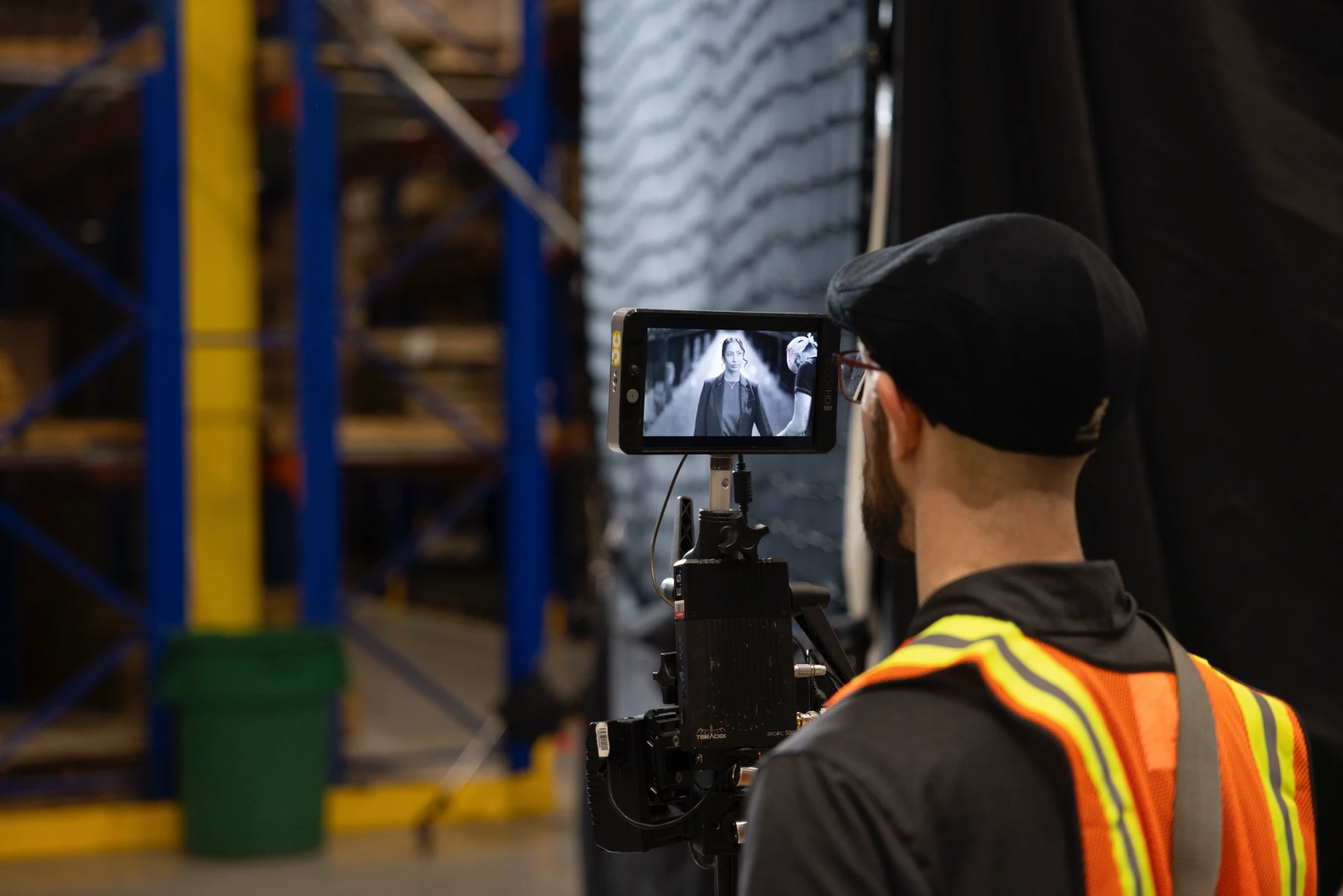
This is the part most people picture when they think about video production: director, camera department, lighting,sound, production team, locations, talent and equipment.
Professional commercial production crews in Toronto are not inexpensive.
As a reference point, current crew rates used in commercial production budgeting can look roughly like:
● Director of Photography: around $3,000/day
● 1st Assistant Director: around $1,200/day
● Camera Operator / 2nd Unit DP: around $730/day
● 1st Assistant Camera: around $730/day
● Gaffer: around $645/day
● Key Grip: around $645/day
● Electric / Grip: around $540/day
Those numbers are labour only.
They don't include camera equipment,lenses, lighting and grip packages, production vehicles, locations, art department, catering, insurance, payroll burdens, overtime or the rest of the crew required for a particular production.
Director fees are also typically handled differently. Rather than a standardized crew rate, directing is generally negotiated as a project fee based on the creative scope, preparation required and number of shoot days.
This is why trying to calculate a production budget by adding up a few day rates rarely gets you very far.
A properly crewed commercial shoot can represent tens of thousands of dollars before you get anywhere near editing the footage.
Post-production
Once filming wraps, there's still a lot of work left.
Post-production can include:
● Editing
● Motion graphics
● Visual effects
● Colour
● Sound design and mix
● Music licensing
● Voiceover
● Captions
● Versioning
● Different durations and aspect ratios
● Final mastering and delivery
And increasingly, we're not delivering one video.
A single production might result in a60-second hero film, 30-second and 15-second cut downs, vertical versions, paid social edits, photography, a b-roll library and additional content designed to be used over the following year.
That changes how we think about the budget.
The number we think matters more than cost per video
One of the biggest changes we've seen in how we approach production is that cost per video isn't always a particularly useful metric anymore.
Cost per usable asset often tells you much more.
Imagine one company spends $15,000producing a single two-minute corporate video.
Another spends $75,000 on a large production and comes away with three hero films, six cut downs, a collection of vertical social assets, photography and an evergreen footage library.
The second production costs significantly more.
But the company may also have created months or even years of usable brand content in the process.
We saw this on our work with Oxford Properties Group.
Rather than treating every deliverable as a separate production, we approached the work as a connected content system.The same visual language, production approach and footage could work across brand films, campaign content and shorter digital assets.
That's an important distinction.
You're not necessarily commissioning a video anymore.
You're deciding what content you can create from a production investment.
When we're planning a shoot, we're almost always thinking beyond the hero film. What else can we capture while the crew,locations, talent and equipment are already there? What might marketing need six months from now? Can the footage work in different formats? Is there value in capturing stills at the same time?
That's usually where the economics of a larger production start making much more sense.
What can push a video production budget higher?
There are a few costs that can change a budget quickly.
Talent and usage
Professional performers are paid not only for their time on set, but often for how their likeness is used.
Digital, broadcast, paid media, territory and length of use can all affect the cost.
If we're producing advertising rather than an internal corporate film, we want to understand that usage before casting begins.
Locations
Filming in your own office can be relatively straightforward.
Renting a high-end corporate location,shutting down a restaurant, filming on city streets or building an environment in a studio is another story.
Location fees themselves are only part of the cost. Permits, parking, transportation, security, location management and additional production time can all come with them.
Production design
Sometimes the best location already exists.
Sometimes we need to make it exist.
Props, set dressing, custom fabrication,wardrobe and production design can dramatically change what's possible visually, but they also change the scale of the production.
Music
Music costs can range from relatively inexpensive production-library tracks to significant commercial licensing fees.
Where the video will run, for how long and in which territories all matter.
Versions and deliverables
This one gets underestimated all the time.
A 60-second 16:9 film is one deliverable.
Add a :30, :15 and :06. Then create 9:16,4:5 and 1:1 versions. Add captions. Maybe French versions. Suddenly that one film has become dozens of individual masters.
If we know that at the beginning, we can design the production and post workflow around it.
Adding it at the very end is much less efficient.
Travel
Once a production moves outside Toronto,travel days, flights, accommodation, transportation, per dems and equipment movement can all become part of the budget. We have trusted crew and production partners across Canada and internationally, which can help minimize those costs, but travel is always a consideration.
What should be included in a video production quote?
This varies by project, but a full-service production estimate should make it clear what's included across creative, production and post.
At minimum, we want clients to understand:
● What creative development is included
● How many shoot days are budgeted
● What crew and equipment are included
● Whether locations, talent and production design are included
● What the final deliverables are
● How many feedback rounds are included
● What music or stock licensing is included
● Whether colour and sound finishing are included
● Which aspect ratios and durations are being delivered
● Whether captions or accessibility requirements are included
● How travel and expenses are being handled
The point isn't to make an estimate unnecessarily complicated.
It's to make sure everyone is talking about the same production.
A quote that looks cheaper because half the project hasn't been included isn't actually cheaper.
When a larger production isn't the right answer
Not every piece of video content needs a large production behind it.
If you need frequent, straightforward social content, an internal team or good freelance creator may make much more sense.
If you're filming a simple executive update that's going to live on LinkedIn for a week, you probably don't need a20-person crew.
And if the message itself hasn't been figured out yet, spending more money on production isn't going to solve that problem.
We tend to think about production quality as an amplifier.
A strong idea executed well gets stronger.
A weak idea executed beautifully is still a weak idea.
The question isn't really "How much should we spend on this video?"
It's what does this piece of content need to do, and what level of production gives it the best chance of doing it?
Sometimes that's $15,000.
Sometimes it's $150,000.
Both can be the right answer.
How we scope and price video production at WM Creative Studio
We generally work on a fixed project fee rather than billing clients by the hour.
Early in the process, we're usually trying to understand four things:
What are we trying to accomplish?
A recruitment film and a national brand campaign have very different jobs to do.
Who needs to see it, and where will they see it?
Internal communications, organic social,paid digital and broadcast all come with different creative and production considerations.
What do we actually need to deliver?
Not just the hero film. Every cut down,format, still, version and supporting asset.
What level of production does the idea require?
Sometimes that means a small documentary crew.
Sometimes it means casting, multiple locations, production design, a full commercial crew and several days of filming.
Once we understand those things, we can build the production around the objective rather than trying to squeeze every project into the same package.
We'll also usually talk about budget early.
Not because the number determines the idea, but because there's no value in developing a $150,000 concept for a$30,000 production.
Knowing the parameters lets us solve the right problem.
Final thoughts
There isn't really a standard price for corporate video production because there isn't a standard corporate video.
The more useful question is what you're trying to make and what it needs to accomplish.
If you need one straightforward interview, build the production around that.
If you're launching a campaign that needs to work across paid media, social, your website, sales presentations and internal communications for the next year, think bigger than the hero film.
The best production budgets aren't necessarily the smallest or the largest.
They're the ones where the money onscreen matches the job the content has to do.
Frequently Asked Questions
How much does a corporate video cost in Toronto?

A professionally produced corporate video in Toronto will often start around $10,000 to $20,000 CAD for relatively straightforward interview-led work. More developed brand films, recruitment videos and customer stories commonly fall between $20,000 and $80,000+,while larger commercial productions and multi-asset campaigns can range from $75,000to $150,000+.
Why do Toronto video production rates vary so much?
Because the scope of production varies enormously. Crew size, equipment, shoot days, locations, talent, creative development, production design, post-production and the number of final deliverables all affect the budget. A small interview shoot and a director-led commercial production are fundamentally different projects.
What should be included in a corporate video production quote?
A full-service quote should clearly define creative development, pre-production, crew, equipment, filming, editing, colour, sound, music and the agreed deliverables. It should also identify any additional costs such as talent usage, locations, travel, versioning,accessibility requirements and additional revision rounds.
How much does a professional video production crew cost in Toronto?
Individual commercial crew rates can range from roughly $500 to $3,000+ per person per day, depending on the role. However, labour rates shouldn't be confused with the cost of a shoot day.Equipment, payroll burdens, overtime, locations, production expenses, art department, transportation, insurance and other costs sit on top of crew labour.
How much should a company budget for video annually?
There's no universal number.
For companies producing video regularly,we think it's more useful to build an annual content plan than simply multiply the cost of one video.
A company might spend $50,000 on a few targeted productions or several hundred thousand dollars across campaigns,product launches, customer stories, social content and internal communications.
The opportunity is to plan those needs together.
When productions can be consolidated and footage can be intentionally captured for multiple uses, the cost per usable asset usually comes down significantly.

About the Author
Will Murphy
His work spans every stage of the creative process, from strategy and scripting through production, post-production, and creative direction, helping organizations communicate with clarity, authenticity, and impact. Whether producing cinematic brand films, thought leadership content, product launches, or social campaigns, Will believes the strongest creative work starts with understanding the audience and telling stories that genuinely connect.
Through the WM Creative Studio blog, Will shares insights on video strategy, content marketing, production, and the evolving creative landscape, helping brands create content that works harder, lasts longer, and drives meaningful business growth.